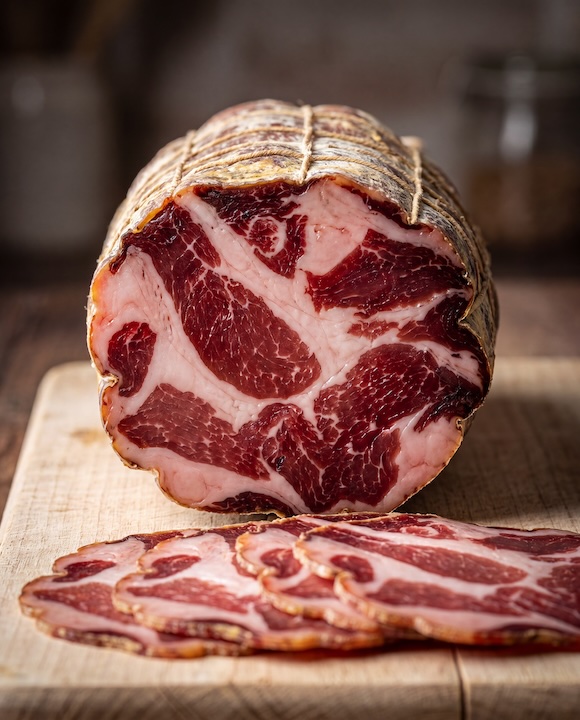
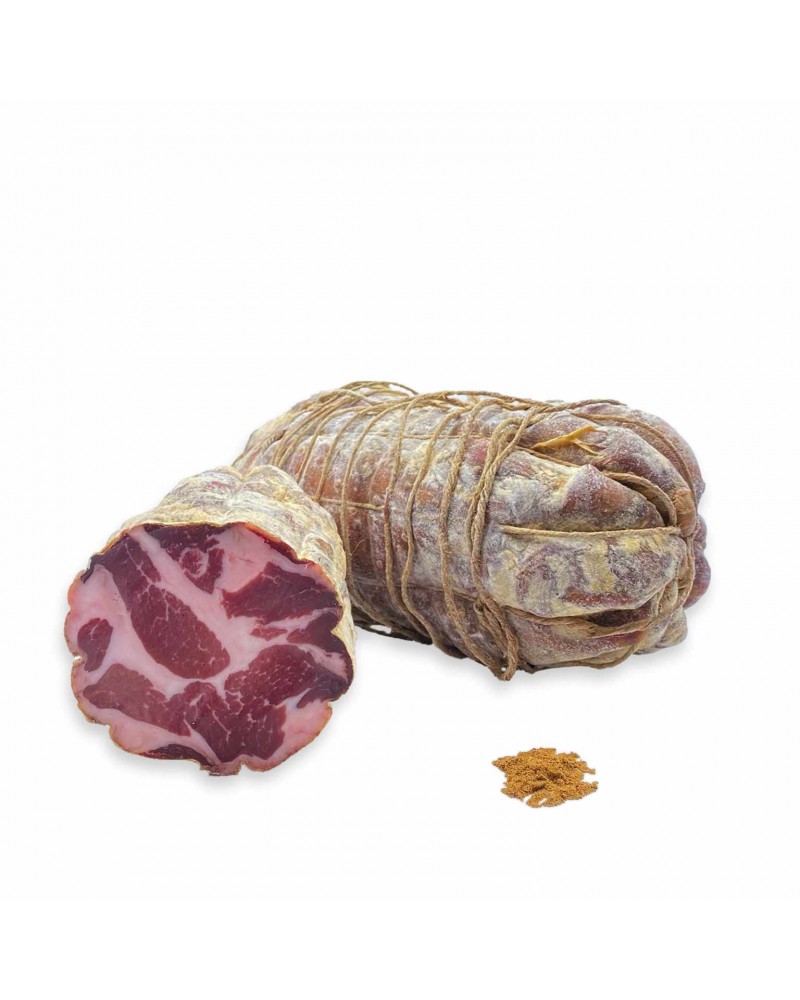
Aged coppa is a high-quality cured meat esteemed worldwide for its intense and aromatic flavor. Crafted from the pork shoulder cut, it is aged for several weeks, allowing the meat to develop its distinctive aromatic notes and signature taste.
The history of aged coppa dates back many centuries, to a time when meat processing and preservation became an art form requiring exceptional skill and meticulous attention. Today, the final result is a highly prized charcuterie product, celebrated by lovers of fine cuisine everywhere. Aged coppa has become an icon of Italian gastronomy, symbolizing the country’s long culinary tradition and its passion for excellent food.
Records show that the production of Coppa di Parma was already established by the late 17th century within a territory encompassing the provinces of Parma, Piacenza, Reggio Emilia, Modena, Mantua, Pavia, Cremona, and Lodi. In fact, several travelers of the era mentioned this specific cured meat in their diaries as one of the signature regional products of the Parma area. An interesting historical record from a 1723 inventory outlined the strict requirements to become a certified lardarolo (pork butcher): candidates were required to possess a specific number of salamis and biondole to qualify for the profession. Indeed, the early history of this specialty was passed down under “disguised names,” appearing in historical documents as biondole or salame investito.
During those same years, however, coppe were also explicitly listed in food supply contracts for the royal kitchens of Duke Don Ferdinand of Bourbon. By the turn of the following century, sales of coppa surged across local markets, paving the way to the modern era, where Coppa di Parma is savored in Italy and across the globe as an authentic gourmet delicacy.
| Valori nutrizionali medi per | 100 g |
|---|---|
| Energia | 433 Kcal – 1796 KJ |
| Proteine | 26.46 |
| Carboidrati | 0.2 (0.1 sugars) |
| Grassi | 36.3 (14.6 saturated) |
| Sale | 3.9 |