
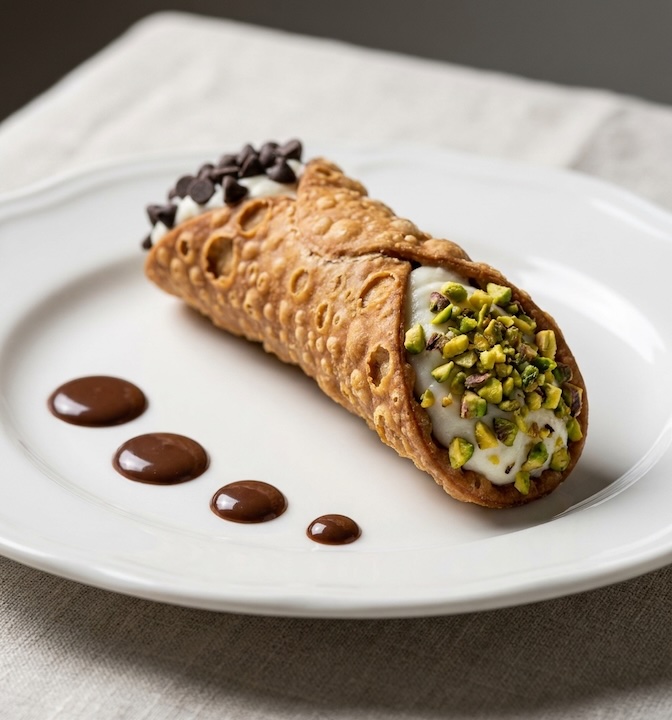
The Sicilian cannolo is a legendary masterpiece of Italian pastry, deeply rooted in the vibrant history of Sicily. While its exact origins are steeped in lore, it is widely believed to date back to the 9th-century Arab rule of the island.
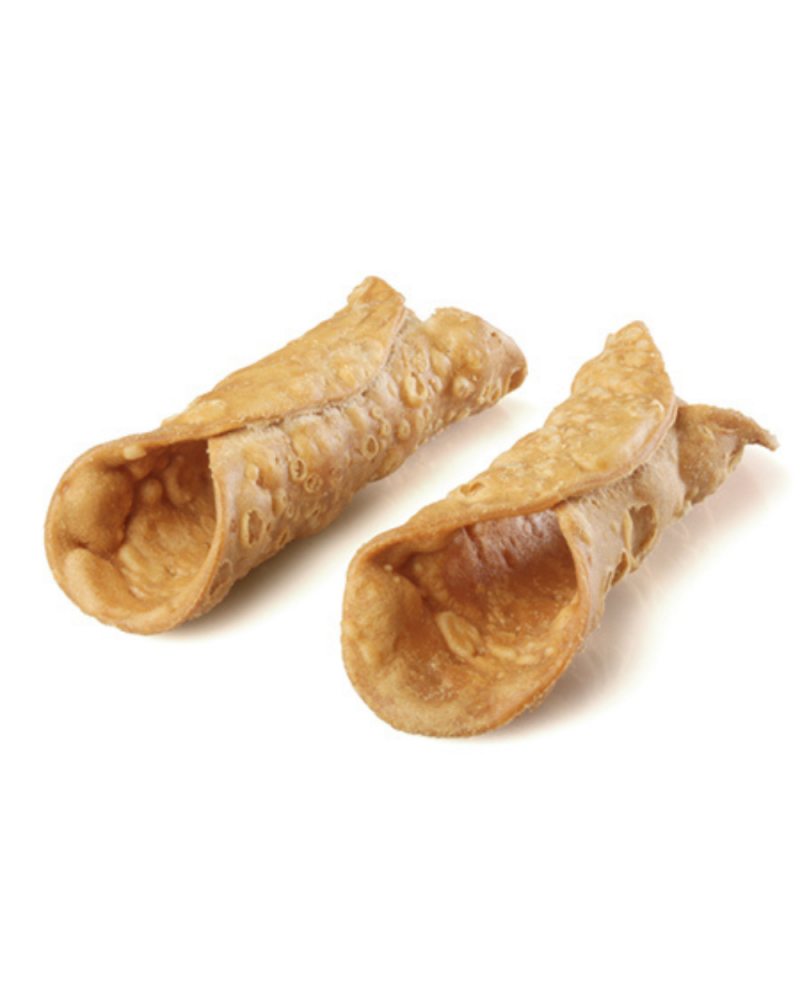
During this era of rich cultural exchange, Arab culinary traditions heavily influenced Sicilian baking. It was during this golden age that the cannolo, with its distinctive tubular shape, first began to take form. In fact, the name itself is thought to derive from the Arabic word qanawat, meaning “channel” or “tube.” Originally, this delicacy consisted of a thin, crispy shell of fried pastry dough wrapped around a wooden mold, then filled with a velvety cream made from fresh sheep’s milk ricotta and sugar.
Over the centuries, the recipe gracefully evolved. By the 18th century, Sicilian aristocrats began elevating the dessert, experimenting with premium additions like candied fruits. However, it wasn’t until the 20th century that the cannolo we know and love today was perfected—featuring a signature shell that is thicker and shatteringly crisp, paired with fillings enriched by decadent chocolate chips or bright citrus peel.
Today, the cannolo is the ultimate symbol of Sicilian pastry craftsmanship, celebrated across every province of the island. Palermo is world-renowned for its traditional ricotta-filled version, while Catania is famous for its smooth pastry cream interpretations.
Loved by food connoisseurs across the globe, the Sicilian cannolo remains a timeless icon of heritage and culinary artistry, preserving its authentic, centuries-old roots in every spectacular bite.
| Valori nutrizionali medi per | 100 g |
|---|---|
| Energia | 356 Kcal – 1508 KJ |
| Proteine | 14.2 |
| Carboidrati | 63.2 (50.6 sugars) |
| Grassi | 5.2 (4.3 saturated) |
| Fibre | 0.9 |
| Sale | 0.53 |


